A circuit you can see working
A panel, some wires, a bulb and a small fan. Kids connect it themselves, and when the sun hits the panel something lights up or spins.
- Current, voltage and power, read off a meter
- Why the bulb dims under a cloud
Energies Education is coming soon. We're building a kit that travels to schools, where kids put together a small solar circuit themselves and watch it light a bulb or spin a fan.
Move your cursor to move the sun. Scroll to run the day.
Only one point on a panel's curve makes the most power, and the inverter hunts for it all day as the sun climbs and the cells heat up.
Finding it is called maximum power point tracking. It sounds advanced, but a small version fits on a classroom desk: a panel, a simple controller and a meter, with the numbers moving every time a cloud goes over.
The kit is still being designed. This is the plan so far.
A panel, some wires, a bulb and a small fan. Kids connect it themselves, and when the sun hits the panel something lights up or spins.
Tilt the panel and the power changes. Kids find the best angle by hand, then see how a tracker like the ones on this page does it all day.
Charge a small battery while the sun is up, then run the light after dark. It's the same job the grid's batteries do every evening.
On a clear spring day, rooftop solar in South Australia can push the demand left for the grid close to zero. Spot prices in the National Electricity Market go negative for hours, because some generators would rather pay to keep running than shut down and restart.
Spot price now$0/MWh
It's a strange result and a useful lesson. Making clean power is the easy part now. The hard part is using it when it's made, or storing it for later.
Between five and eight, solar falls away, demand climbs and prices can swing from below zero to hundreds of dollars a megawatt-hour inside an hour. That steep climb is the neck of the duck curve.
Spot price now$0/MWh
Batteries charged on cheap midday power discharge into it. That's the kit's small battery running a light after dark, at the size of a city.
“In the energy transition, behaviour change is the lowest hanging fruit, but the hardest nut to crack.”
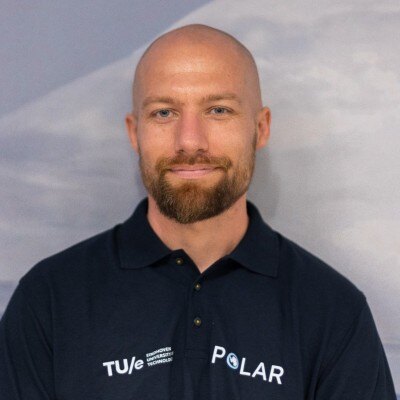
The technology already exists. What's missing is energy literacy. For most people, energy turns up through a plug or a pump and doesn't get much thought. The transition changes that relationship. Energy becomes a conscious choice, where we vote with our wallet for the fuel and the industry that fit our values. That only works if people understand what they're choosing.
Brad has taught before, as an English teacher and teacher trainer in Morocco, and he led the student team at TU Eindhoven that built an autonomous solar rover. Education is the next part of Energies, starting with schools, because the kids wiring up circuits today are the engineers and tradespeople who'll build what comes next.
We're not taking bookings yet. Leave your details and we'll get in touch when the kit is ready.
Thanks. We'll be in touch when the kit is ready.
Or email bmugdway@gmail.com